

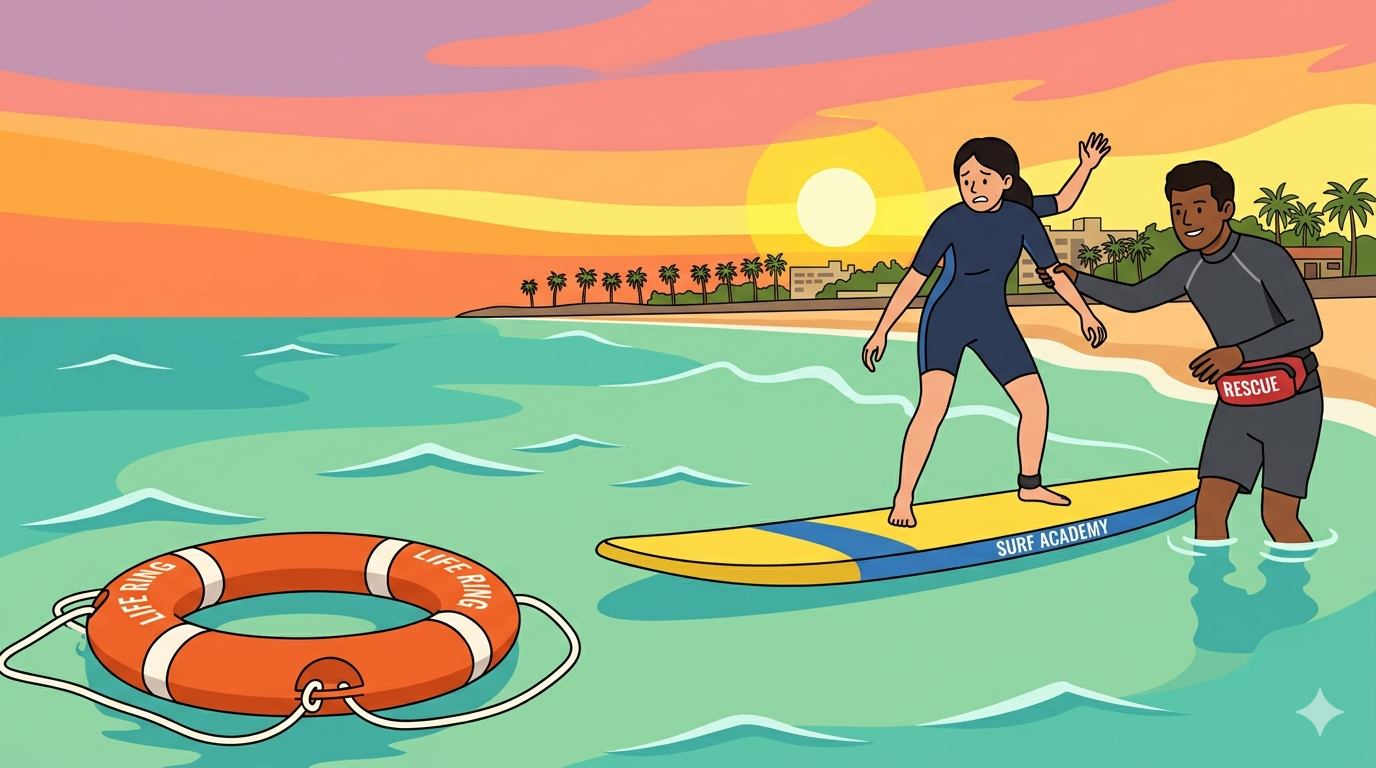

Introduction: The Common Surfing Doubt
If you’ve ever watched surfers gliding over waves and thought, “I’d love to try that, but I can’t swim,” you’re not alone. Many beginners assume swimming is a must for surfing, but that’s not entirely true. Modern surf schools design beginner sessions that are safe, shallow, and supported, allowing anyone to experience surfing without needing strong swimming skills.
Let’s break down how this works and what makes surfing accessible even for non-swimmers.
Why You Don't Need to Be a Pro Swimmer
Beginner surf lessons are specifically tailored for all skill levels. Here is how instructors ensure you stay safe while having the time of your life:
- Shore-Based Training: Before you even touch the water, you'll learn the techniques of paddling, popping up, and balancing on the sand.
- Shallow Water Practice: Most beginner lessons take place in waist-deep water. You'll always be able to touch the ground, giving you total control and confidence.
- The Right Gear: Beginner boards are large, stable, and highly buoyant. They act as your own personal life raft.
- Constant Supervision: Certified instructors stay right by your side, guiding you into waves and ensuring you're comfortable at all times.
"Surfing is about the connection with the ocean. You don't need to be a professional swimmer to feel that thrill; you just need the right guidance and a sense of adventure."
Safety First
While you don't need to be a competitive swimmer, being comfortable in the water is important. Surfing schools provide life jackets if requested, and the leash attached to your ankle ensures your board—your best flotation device—is always within reach.
So, if the only thing holding you back was your swimming ability, it's time to rethink. The waves are waiting for everyone!